
Rules and ethics
Can an EPC rating claim survive ASA scrutiny? A guide for UK creators
Real estate influencers must back EPC rating claims with the EPC register, accreditation schemes and green-claims guidance or risk ASA action.
What to take away
- Real estate influencers cannot support an EPC rating claim without checking the EPC register and the accreditation scheme behind it.
- Green-claims guidance and the CAP Code require evidence before you publish, not after a complaint.
- Retrofit claims about savings, payback or added value are the most common unsupportable statements.
- A worked EPC C example shows how a single claim can fail when the register tells a different story.
- Use the claim-by-claim checklist before every post that mentions energy performance.
Example: an EPC C claim tested against the register
A creator posts a reel about a two-bedroom flat in Leeds. The caption reads: "This flat is now EPC C after a full retrofit. Bills cut by half. A great green investment."
The creator checked the EPC register. The certificate shows a rating of E, lodged in 2019. No newer certificate exists. The assessor's scheme is listed, but the creator did not contact it.
The claim "now EPC C" is unsupported. The register shows E. Unless a new assessment has been lodged, the claim fails.
The claim "bills cut by half" is unsupported. There is no energy bill data in the EPC. The creator has no meter readings or bills.
The claim "green investment" is a green claim. Under the CMA's consumer enforcement guidance, it needs evidence. The EPC alone does not show investment performance.
What could the creator say instead? "The EPC register shows an E rating from 2019. The certificate recommends wall insulation and a new boiler. A new assessment would be needed to confirm any improvement." That is supportable.
This example shows how a single unchecked claim can breach the CAP Code. It also shows why the register and the accreditation scheme are the creator's first tools.
For real estate influencers, the lesson is to separate what the register proves from what you hope is true.
How the EPC register and accreditation schemes work in the UK
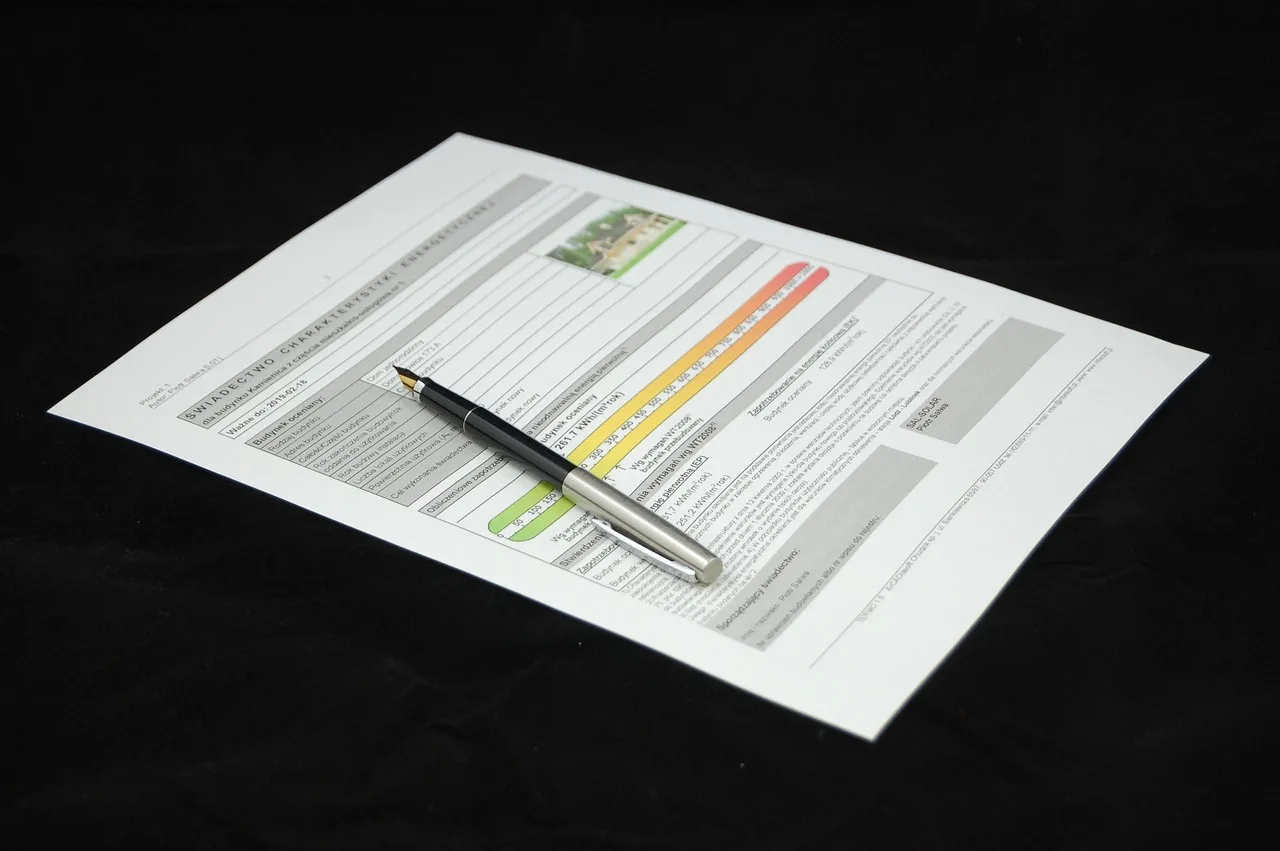
An Energy Performance Certificate records a property's energy efficiency on a scale from A to G. It also lists recommended measures and their potential effect on the rating. The certificate is lodged on the EPC register, a public database for England, Wales and Northern Ireland. Scotland runs its own register through the Energy Saving Trust.
How an EPC gets lodged
- Accredited assessor surveys property
- Rating scored A to G
- Recommendations listed on certificate
- Certificate lodged on EPC register
- Not on register = no standing
Every EPC is produced by an accredited assessor. Accreditation schemes are the bodies that train, certify and monitor those assessors. Examples include Stroma, Elmhurst Energy and Quidos. If a certificate is not on the register, it has no standing.
The register for England, Wales and Northern Ireland is on GOV.UK. Search by postcode, or by the report reference number printed on the certificate. Scotland keeps a separate register.
For creators, the register is the first port of call. It tells you the rating, the date, the assessor's scheme and the property's address.
Energy performance and certification rules draw on the Housing and Regeneration Act 2008, the Building Regulations &c. (Amendment) Regulations 2012, the Energy Act 2011 and the Energy Act 2013.
A creator who treats the register as a live performance record will overclaim. The register is a snapshot. It reflects the property at the point of assessment, based on the assessor's inspection and the data available then.
Accreditation schemes matter because they give you a route to verify an assessor. If a certificate looks wrong, the scheme can investigate. A creator who names an assessor or scheme without checking risks a complaint to that scheme.
For real estate influencers, the practical step is simple. Before you cite a rating, find the certificate on the register. Note the date. Note the scheme. Then decide what you can honestly say.
Green-claims guidance and the ASA line on environmental claims
The Advertising Standards Authority enforces the CAP Code. The Code requires that environmental claims be truthful, substantiated and not misleading. The ASA has published guidance on green claims. It expects evidence before a claim is made, not after a complaint.
The CMA also polices green claims under consumer protection law. Its consumer protection guidance for businesses sets out how businesses should substantiate environmental statements. A claim that a property is "eco-friendly" or "green" without qualification can fall foul of both regulators.
The CMA has already acted on green claims. ASOS, Boohoo and George at Asda agreed to change how they present environmental claims after a CMA investigation. The Green Claims Code, published in September 2021, sets out what evidence businesses need.
For property creators, the risk is acute. Energy performance is measurable. If you say a home is efficient, a viewer can check. If the EPC register disagrees, the ASA can act.
The ASA line is that a claim must be interpreted as the average consumer would see it. Qualifiers do not cure a misleading headline. A caption saying "based on a 2019 assessment" will not save a post that screams "EPC C home" when the current rating is E.
Accreditation schemes are not a defence. Being a member of a scheme does not make a claim true. It only shows you have met that scheme's standards.
Green-claims guidance also covers comparisons. Saying a property is "better than most" requires evidence of what most means. Without a data source, the claim is unsupported.
Creators should treat every energy statement as a regulated claim. The same discipline that applies to advertising and finance gates applies to an energy claim in a post. If you would not put it in a paid ad, do not put it in a post.
Retrofit and energy performance claims a creator cannot support
Some claims are simply not supportable from an EPC alone. Here are the common ones.
Claims an EPC cannot support
- "Now EPC C" when register shows lower
- "Retrofit pays back in five years"
- "Adds £20,000 to value"
- "Carbon neutral" from EPC alone
- "Assessor said it would be an A"
- "Most efficient home in the area"
- "EPC valid for ten years" as blanket
- "This property is now EPC C" when the register shows a lower rating.
- "The retrofit will pay for itself in five years" without a verified cost and savings model.
- "This measure adds £20,000 to the value" without a valuation or comparable evidence.
- "The home is carbon neutral" based on an EPC and nothing else.
- "The assessor said it would be an A after works" without a new certificate.
- "This is the most efficient home in the area" without a data source.
- "The EPC is valid for ten years" as a blanket statement, because rules differ by tenure and region.
Each of these fails the evidence test.
Retrofit claims often rely on modelled savings. Models are not guarantees. If you present a model as a fact, you mislead.
Accreditation schemes may offer retrofit warranties. Those warranties cover the workmanship, not the savings. Do not conflate the two.
Green-claims guidance from the CMA is clear that businesses must hold evidence for claims. If you cannot point to a document, do not make the claim.
Creators who cover new-build or renovation content should also check rights, claims and regulated activity before publishing. A claim about energy performance can sit alongside other regulated statements.
Reading an EPC rating without overstating what it proves
An EPC rating is a comparative label. It tells you how the property performs against a standardised model. It does not tell you the actual bills. It does not tell you how the occupants behave. It does not tell you the condition of the fabric.
What an EPC rating does and does not prove
EPC rating proves
- Performance
- Standardised model
- Occupants
- Nothing
- Fabric
- Nothing
- Recommendations
- Suggestions only
- Timing
- Rating at a date
EPC rating does not prove
- Performance
- Actual bills
- Occupants
- Heating behaviour
- Fabric
- Condition of building
- Recommendations
- Predictions of savings
- Timing
- Current performance
A high rating can coexist with high bills if the occupants heat to a different level. A low rating can coexist with low bills if the property is small or lightly used.
The certificate includes recommendations. These are suggestions, not predictions. They show what might be possible if measures are installed and behave as modelled.
The register entry includes the assessor's details and the scheme. If you want to verify a claim, that is where you start. If the certificate is more than a few years old, treat it as historical.
For real estate influencers, the safest approach is to quote the register directly. Say the rating, the date and the assessor's scheme. Then stop. Do not add a value claim or a savings claim unless you have separate evidence.
Images used without permission can compound the problem. If you screenshot a register entry or an EPC, check you have the right to reproduce it. The register is public, but that does not mean every use is fair.
A rating is also tenure-specific. The rules for rented homes differ from owner-occupied homes. Scotland and Northern Ireland have their own regimes. Do not apply one nation's rules to another.
A claim-by-claim checklist for real estate influencers
Use this before you publish any post that mentions energy performance.
Pre-publish energy claim checklist
- Found property on EPC register
- Noted rating, date, assessor's scheme
- Can quote register without extra claims
- Have evidence for retrofit cost figures
- Have data source for comparisons
- Checked green-claims guidance and CAP Code
- Kept record of evidence relied on
- I have found the property on the EPC register.
- I have noted the rating, date and assessor's accreditation scheme.
- I can quote the register without adding unsupported savings or value claims.
- If I mention retrofit, I have evidence for any cost or performance figure.
- If I compare properties, I have a data source for the comparison.
- I have checked the green-claims guidance and the CAP Code requirements.
- I have kept a record of the evidence I relied on.
If you cannot tick every box, change the claim. A weaker claim that survives scrutiny is better than a strong one that fails. The same test applies to a property-media release, which must show the evidence to recoverability before launch.
Creators who also post agency or finance content face further advertising rules. Energy claims do not sit in isolation.
Leeds reel: claim vs register
Creator's claim
- Rating
- Now EPC C
- Bills
- Cut by half
- Investment
- Great green investment
- Newer certificate
- Implied
What the register shows
- Rating
- E, lodged 2019
- Bills
- No bill data
- Investment
- No evidence held
- Newer certificate
- None exists